FALCON FLASH
Dateline: Cleveland, Ohio
April 20, 2009
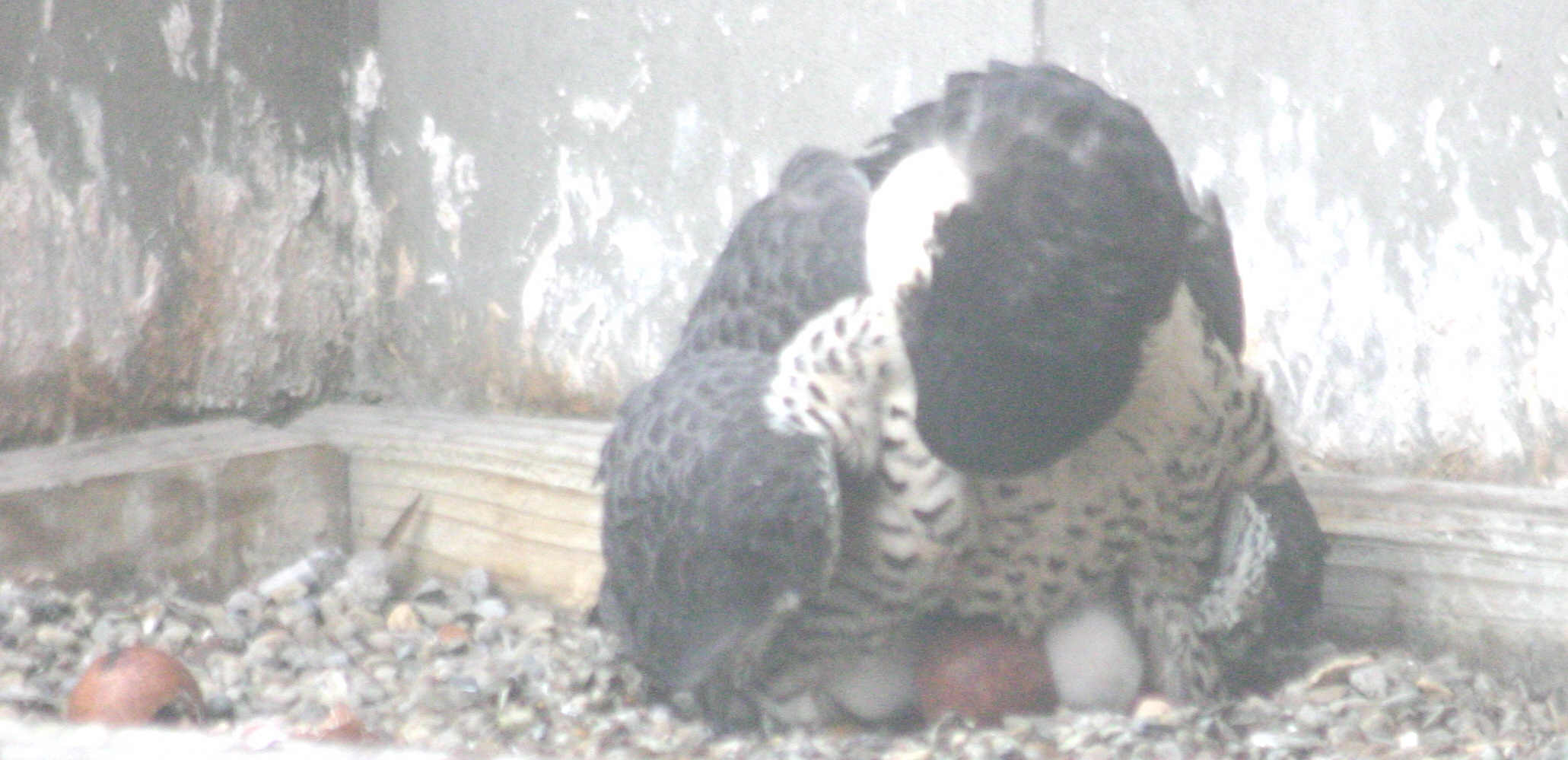
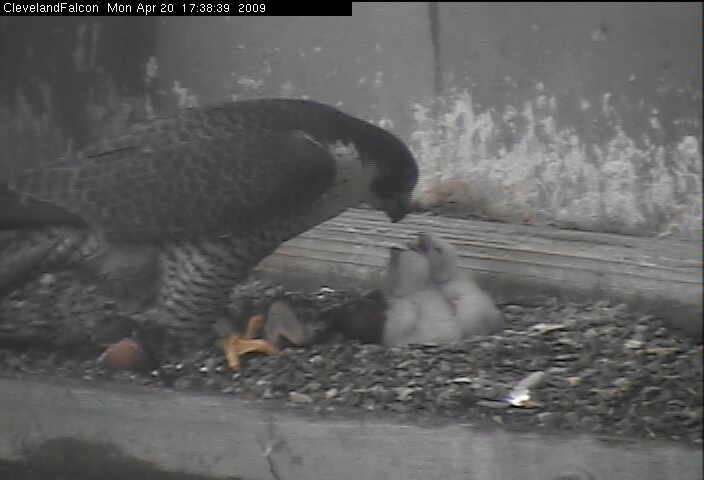
First there was one eyas (the name for raptor young) ……
Volunteer nest monitor, Mr. Wright, tells us: "The chicks will spend a great deal of time sleeping and huddled together for warmth. What to look for..... You want to see each kid with two wings, two legs, two eyes and a beak, you also want to see the "begging response", any time a parent is near...... The parents will cover (mantle) the young for 4-7 days. The young are not able to control body temperature (self-regulate) for about a week, if it stays chilly."
Mr. Harvey Webster, Director of Wildlife Resources at the Cleveland Museum of Natural History tells us: “Peregrine Falcons have semi-altricial young meaning that though the young are comparatively helpless in their early nestling stage they still have to be active participants in the feeding process. Precocial birds like waterfowl are able to follow their mother from day one, are very well developed and feed themselves. Altricial birds are totally helpless at hatch. All they can do is simply thrust their beaks up whenever they sense the presence of a parent. Then the parent stuffs or regurgitates the food down the gaping nestling's mouth. With raptors, the adult will hold its prey in its talons, tear off a piece of meat with its beak and dangle it over the nestling. The chick must reach up and grab the morsel from the parent.”
Our thanks to the Cleveland Museum of Natural History for sponsoring the FalconCams and for the stills.
Photos are courtesy of Scott Wright, volunteer peregrine nest monitor. They may be used by children for school and/or personal projects, but please give Mr. Wright photo credit. All others must contact Mr. Wright directly for permission to use his photos.
Here's some information about feeding from wildlife biologist Marcel Gahbauer: "…. the chicks at a young age already scream for food incessantly, regardless of how recently they have been fed. This will only increase, and eventually you will see both adults away from the nest most of the time, for as long as one or the other is present, the chicks will be clamouring for food from them, even if they have none."
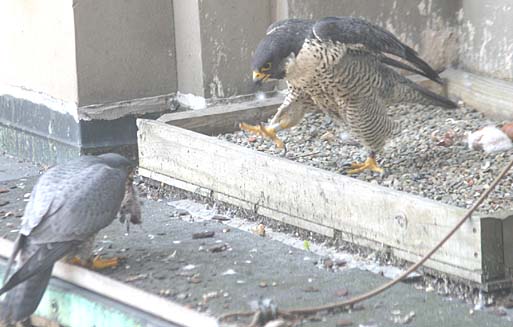
Buckeye is now very busy bringing food to the family.